

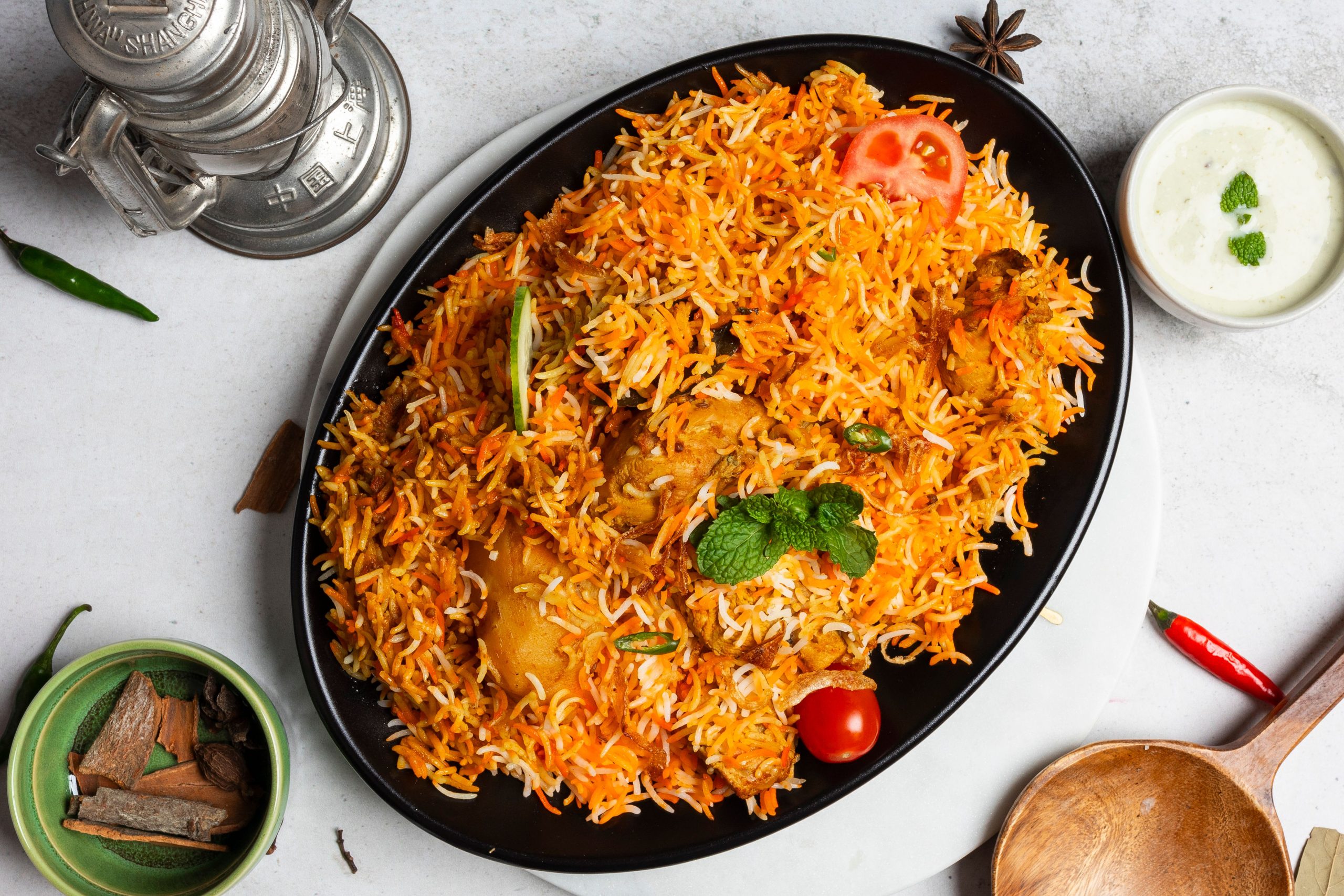
A real Chicken Biryani has long grains of rice that fall apart when you fork through them, with deep colour and flavour running all the way to the bottom of the pot. That is what we cook at Kebabish. Nothing rushed. Nothing skipped.
The dish
A lot of people in Durban have eaten "biryani" their whole life and have never had the real thing. So before anything else, here is what a proper biryani actually is.
Biryani is rice and meat cooked together in layers in a sealed pot. The meat is cooked first in a thick masala. The rice is half cooked separately. Then the two are layered into one pot, the lid is sealed, and the whole thing goes onto a low fire for the final cook. The steam circulates inside the sealed pot, and every grain of rice picks up the flavour of the masala rising from below.
That last step is called dum cooking. It is the heart of biryani. Without it you do not have biryani. You have rice and curry on the same plate.
When you open a real biryani at the table, the smell hits you first. Fried onions. Whole spices. The grains are long and separate, not stuck together. The colour goes from deep orange at the top to pale white at the bottom. That is what we serve at Kebabish.
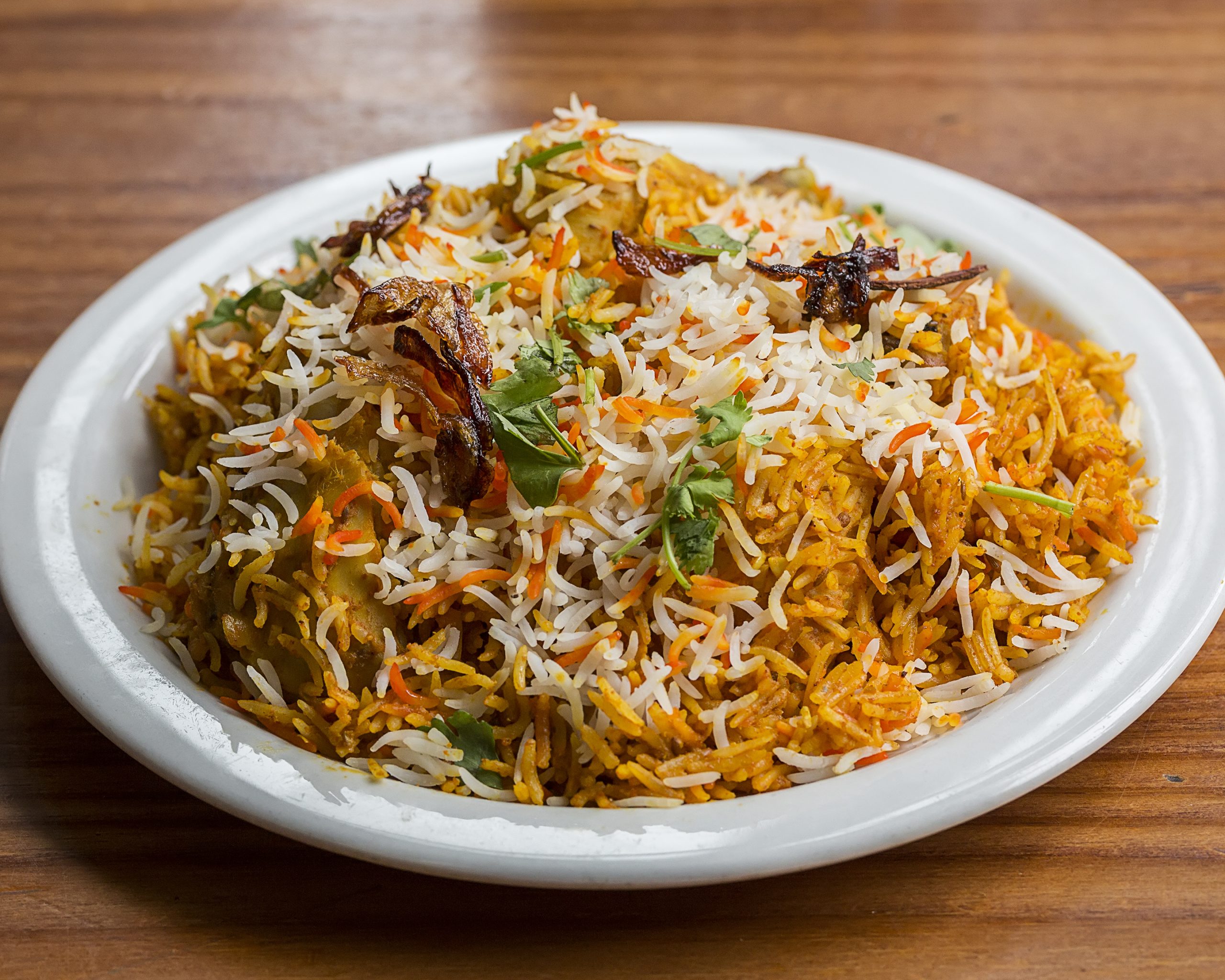
Chicken Biryani - layered, slow cooked, dum method - at Kebabish Halaal Indian Restaurant - Florida Road
The history
The word "biryani" comes from the old Persian word "biryan", which means "to fry" or "to roast". The dish came into the Subcontinent through Persian and Mughal traders and rulers many centuries ago. Once it arrived, every region made it their own.
Hyderabadi Biryani is more delicate, with the meat cooked raw with the rice in one go. Lucknowi Biryani is lighter, with the meat cooked first and layered on top. Then there are the Pakistani styles, which are louder. Bolder spice. Stronger colour. More fire.
Our family is from Faisalabad in the Punjab, and the Punjabi and Lahori biryanis we grew up with are the kind that fill the room with their smell. That is what we cook at Kebabish. Not subtle. Not delicate. A proper Pakistani biryani that stays with you long after you have eaten it.
The ingredients
A few non-negotiable parts.
Get the balance right and the dish sings. Get it wrong and the whole thing falls flat. That is what goes into our pot every time. Nothing left out. Nothing replaced with a shortcut.
The method
Dum cooking sounds fancy but the idea is simple. You put everything into a pot, you seal the lid so no steam escapes, and you cook on a very low fire for a long time. Sometimes the lid is sealed with dough so the seal is airtight.
What happens inside
A rushed biryani cannot do this. Pre-mixed rice and curry cannot do this. Only a sealed pot and time can.
On the plate
The biryani comes to your table or into your takeaway box straight from the pot. A generous portion of long grain basmati, deep orange where the masala has soaked through, pale white at the top, with crispy fried onions and fresh coriander scattered across the surface. The boneless chicken is hidden inside the rice, soft and full of flavour from the slow cook.
If you are eating in, take the first forkful from the orange section, then the white section, then mix them together. That is part of the experience. If you are taking it away, it travels well, and the flavour does not lose anything by the time you get home.
A dish for everyone
In Pakistani culture, biryani is never a small private meal. It is the dish you cook when family is coming over. It is the dish at every wedding, every Eid, every big family gathering. The size of the cooking pot is a sign of how generous the host is feeling.
That is something we have brought with us to Durban. Our biryani portions are real portions. Friday lunch, a big family dinner, a celebration meal - biryani works for all of it.
Pakistani vs Durban style
Most biryanis in Durban are South African Indian style biryanis, which are different from Pakistani biryanis. They are good in their own right, but they are not the same dish. South African biryani tends to be cooked all together as one mix, often with potatoes and lentils added in, and the spice profile leans towards Durban masala.
Pakistani biryani is layered, lighter on potato, and the spice profile leans towards the Punjabi and Mughlai tradition. Both have their place, and we love a good Durban biryani too. But if you have never tried a real Pakistani style biryani, this is the place to do it. Our cooks come from the tradition. Our spices come from the tradition. The only thing that has changed is the city we are cooking in.
Come in
We are at 49 Florida Road, in the middle of the Florida Road restaurant strip. You can dine in, get takeaway, or order delivery. Biryani holds up well in a takeaway box because the dum cooking has already locked all the flavour into the rice, so it does not lose anything on the way home.
For larger orders, give the kitchen a call ahead of time on 031 303 7806. A big biryani needs to be cooked properly, and a heads up means we can have it ready when you want it.
Good to know
Yes. Kebabish is Halaal Certified by The Halaal Foundation of South Africa (THFSA).
Medium spicy by Pakistani standards. It has heat, but it is not overpowering. If you want it milder we can adjust on request.
Boneless. Soft pieces of boneless chicken cooked through the masala and layered with the rice.
Yes. We do dine in, takeaway, and delivery. Biryani travels well so it stays full of flavour by the time you eat it.
Durban biryani is South African Indian style, often cooked as one mix with potatoes and lentils, using Durban masala. Our biryani is Pakistani style, layered, slow cooked using the dum method, with Punjabi and Mughlai spices.
49 Florida Road, Berea, Durban, 4001. Right in the middle of the Florida Road restaurant strip.
Our Chicken Biryani is not vegetarian. We do have a Vegetable Biryani on the menu for vegetarian customers.
Yes. Along with Chicken Biryani we serve Mutton Biryani, Beef Biryani (boneless), Vegetable Biryani, Fish Biryani, and Prawns Biryani. See the full menu for prices.
Yes. Give us a call on 031 303 7806 and we can prepare larger orders with a bit of notice.
Dine in on Florida Road, order online for delivery, or give us a call. The pot is on all day.
Order Online View Full Menu